Just a day after the GCAA announced that the UAE’s airspace is fully operational again, all flights are operating normally. The UAE has been forced to impose temporary airspace restrictions again between May 4 and May 11, following drone attacks.
While flights have not been fully suspended, movement is now tightly controlled. Here’s what’s going on and what it means if you’re flying through the region.
What Exactly Has Changed?
According to the official aviation Notice to Airmen (NOTAM A1722/26), parts of the UAE’s airspace are now restricted.
- Only specific flight corridors are open
- Aircraft must follow pre-approved routes and waypoints
- Access to the Emirates Flight Information Region is limited
✈️ UAE has partially closed its airspace for one week (May 4–11). NOTAM A1722/26 confirms Emirates FIR restrictions, with commercial flights limited to narrow corridors via specific waypoints. pic.twitter.com/KsbIUn1KaQ
— (@) <a href=" 5, 2026
In simple terms, aircraft can still fly, but they have fewer route options.
Airports and Routes Affected
The NOTAM clearly lists which airports are open for arrivals, and the exact routes aircraft must follow to enter UAE airspace safely.
Arrivals permitted to:
- OMAA (Abu Dhabi)
- OMAL (Al Ain)
- OMAD (Al Bateen)
Via waypoints: ITRAX, SODEX, TANSU, PEKEM
Arrivals permitted to:
- OMDB (Dubai International)
- OMDW (Al Maktoum International)
- OMSJ (Sharjah)
- OMRK (Ras Al Khaimah)
Via waypoints: TAPRA, PASOV, MUSAP, TANSU, PEKEM
Arrivals permitted to:
- OMFJ (Fujairah)
Via waypoints: MENSA, TANSU, PEKEM
Important Notes
- Only these routes are currently allowed for entry into the UAE airspace
- Flights must strictly follow these corridors
- Additional flow control measures may be applied
In simple terms, aircraft can still land in the UAE, but only through specific “entry gates” in the sky.
Why Has the UAE Restricted Its Airspace?
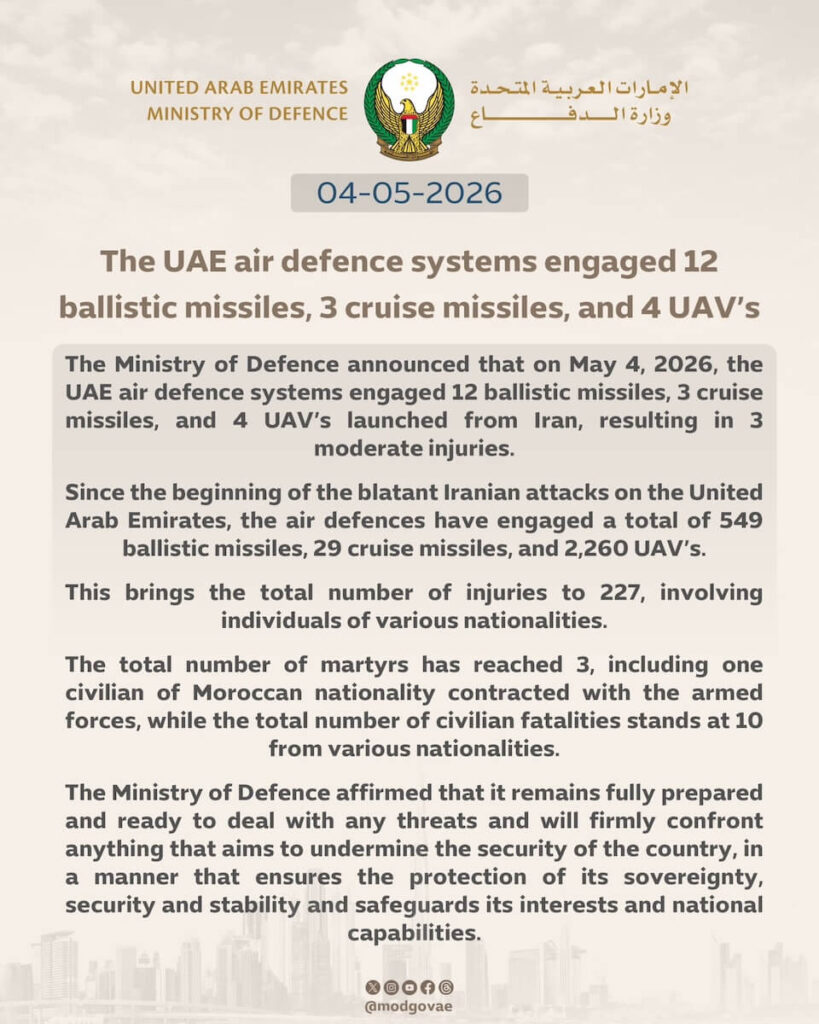
This move follows a serious security situation on May 4. The UAE Ministry of Defence confirmed that its air defence systems intercepted:
- 12 ballistic missiles
- 3 cruise missiles
- 4 drones (UAVs)
Iran reportedly launched these attacks, and although air defences neutralised most of them, the incident immediately raised serious concerns about aviation safety.
Authorities acted quickly to reduce the risk to civilian aircraft. Restricting airspace helps ensure flights avoid sensitive or potentially dangerous zones.

What This Means for Travellers
If you’re flying to, from, or via the UAE, here’s what you should expect:
- Flight Delays and Rerouting: Flights may take longer routes, increasing travel time.
- Schedule Changes: Airlines may adjust departure or arrival timings based on available corridors.
- Possible Cancellations: Some flights may be suspended due to operational constraints.
- Transit Disruptions: If you are connecting through major hubs like Dubai or Abu Dhabi, keep extra buffer time.
Emirates Rebuilds Global Network
Emirates has restored 96% of its global network, now operating flights to 137 destinations across 72 countries, steadily reconnecting international travel through its Dubai hub.
✈️ Emirates says it has restored 96% of its global network. Now flying to 137 destinations across 72 countries, reconnecting the world via Dubai 🌍 pic.twitter.com/YowSLbH8vt
— (@) <a href=" 5, 2026
What Should You Do Now?
If you have upcoming travel plans:
- Check your flight status regularly
- Stay in touch with your airline
- Arrive early at the airport
- Keep travel insurance handy
Small delays are likely. Being prepared will make things smoother.
Final Thoughts
The UAE has not shut down its skies completely. Instead, it is managing traffic carefully while keeping operations running. This kind of partial closure is a safety-first move. It allows flights to continue while reducing exposure to risk during a tense period.
Follow and connect with us on Facebook, Twitter, LinkedIn, Instagram and Google News for the latest travel news and updates!
The post UAE Partially Closes Airspace for One Week: Flights Limited to Specific Routes appeared first on .


