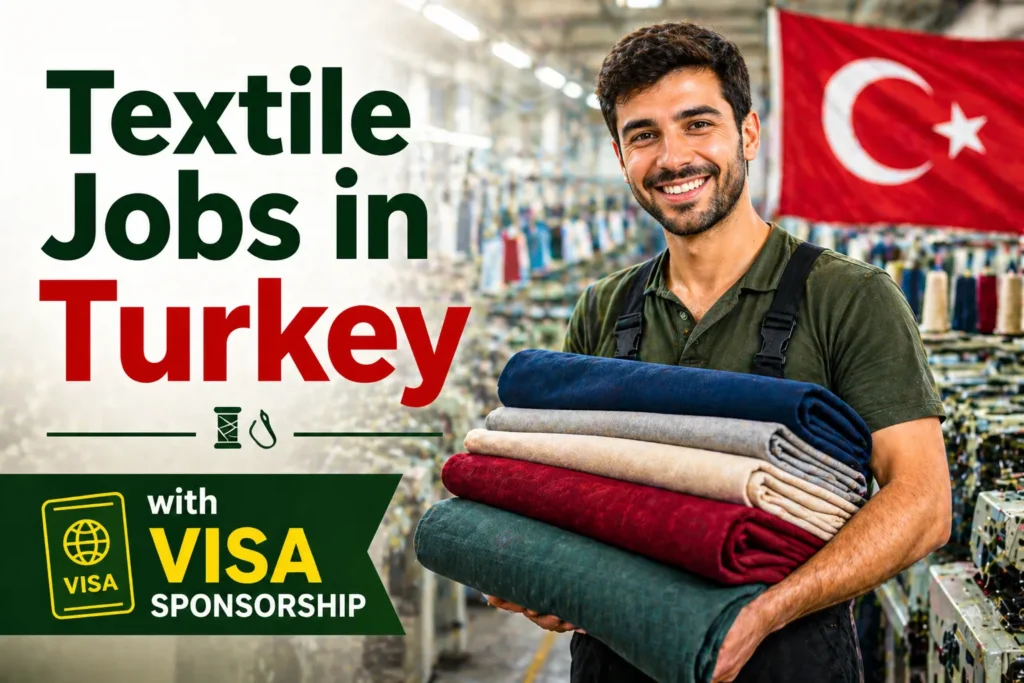
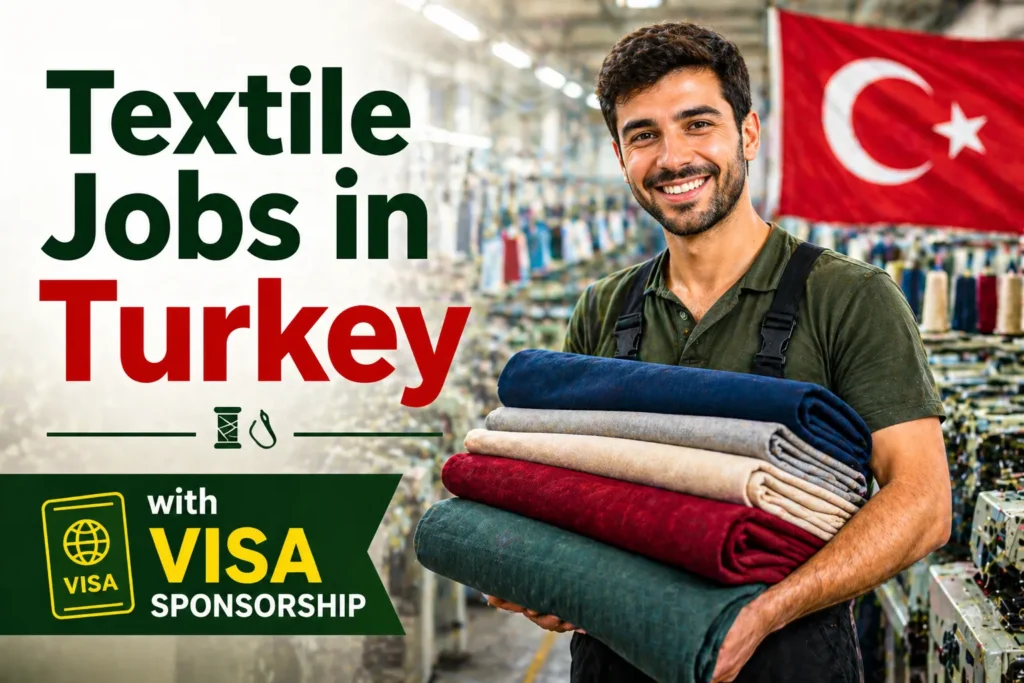
If you’re looking for a manufacturing job in Europe or a nearby region, textile jobs in Turkey can be a realistic option in 2026. Turkey has one of the largest textile and garment industries in the world, supplying clothing and fabrics to Europe, the Middle East, and global markets.
Cities like Istanbul, Bursa, and Izmir are major hubs for textile production, where factories operate year-round and require a steady workforce. Because of this, some companies are open to hiring foreign workers—especially when they need reliable labor or specific skills.
However, unlike Gulf countries, getting visa sponsorship in Turkey can be more selective. Employers usually prefer local workers first, and sponsorship depends on business needs.
Job Overview
| Category | Information |
|---|---|
| Position | Textile Worker |
| Country | Turkey |
| Job Type | Full-Time |
| Experience | Not required (basic preferred) |
| Language | Basic English (Turkish is a plus) |
| Salary | ₺15,000 – ₺30,000 per month |
| Visa | Possible (employer-dependent) |
| Accommodation | Sometimes provided |
Also Check: Kitchen Helper Jobs in Turkey with Work Visa Sponsorship 2026
Where You’ll Be Working
Turkey’s textile industry is very diverse, so your workplace can vary depending on the job you get. Most positions are based in:
- Textile factories and production units
- Garment manufacturing companies
- Fabric processing plants
- Export and packaging warehouses
- Small workshops and tailoring units
Many of these workplaces run on production lines, especially in large factories.
Types of Textile Jobs Available
Textile jobs are not limited to one role. You may find opportunities such as:
- Sewing machine operator
- Fabric cutter
- Packing and labeling worker
- Quality checker
- Ironing and finishing staff
- Textile production assistant
Some roles require experience (like machine operation), while others are beginner-friendly.
What You’ll Be Doing Daily
Textile jobs are usually repetitive but easy to learn. Your daily tasks may include:
- Operating sewing or textile machines
- Cutting and shaping fabric materials
- Packing finished garments
- Checking product quality
- Maintaining cleanliness in the workspace
- Meeting daily production targets
Most work is done indoors in factory environments.
Skills and Requirements
Even though many textile jobs are entry-level, employers still expect basic discipline:
- Ability to follow instructions
- Good hand-eye coordination
- Basic English communication
- Willingness to work long hours
- Physical stamina for standing work
For higher-paying roles, machine operation skills or previous factory experience can help.
Salary and Working Hours
Textile salaries in Turkey depend on your role and experience:
- Entry-level workers: ₺15,000 – ₺20,000/month
- Skilled workers: ₺20,000 – ₺30,000/month
- Overtime: Often available
Typical working schedule:
- 8–10 hours per day
- 5–6 days per week
Keep in mind that wages in Turkey are lower than in Western Europe, but the cost of living is also relatively affordable.
Benefits You Can Expect
Some employers provide additional support, especially for foreign workers:
- Work visa sponsorship (in selected cases)
- Accommodation or housing assistance
- Transportation support
- Meal allowances (in factories)
- Stable employment contracts
However, benefits vary widely depending on the company.
How to Apply?
If you want to apply for textile jobs in Turkey, follow these steps:
- Prepare a simple CV with your personal details and any factory or textile experience
- Search online using keywords like “Textile Jobs in Turkey with Visa Sponsorship 2026”
- Apply through official company websites or trusted recruitment agencies
- Try to apply directly to textile companies in cities like Istanbul or Bursa
- Attend interviews and provide required documents
- Apply Now by submitting your CV on verified job portals or directly contacting textile companies in Turkey offering jobs with visa sponsorship
Final Thoughts
Textile jobs in Turkey with visa sponsorship in 2026 can be a good opportunity—but only if you approach it realistically. The industry is large and always active, but competition is high, and visa sponsorship is not guaranteed for everyone.


